 Matunion
Crane Pads for Sale: Introduction
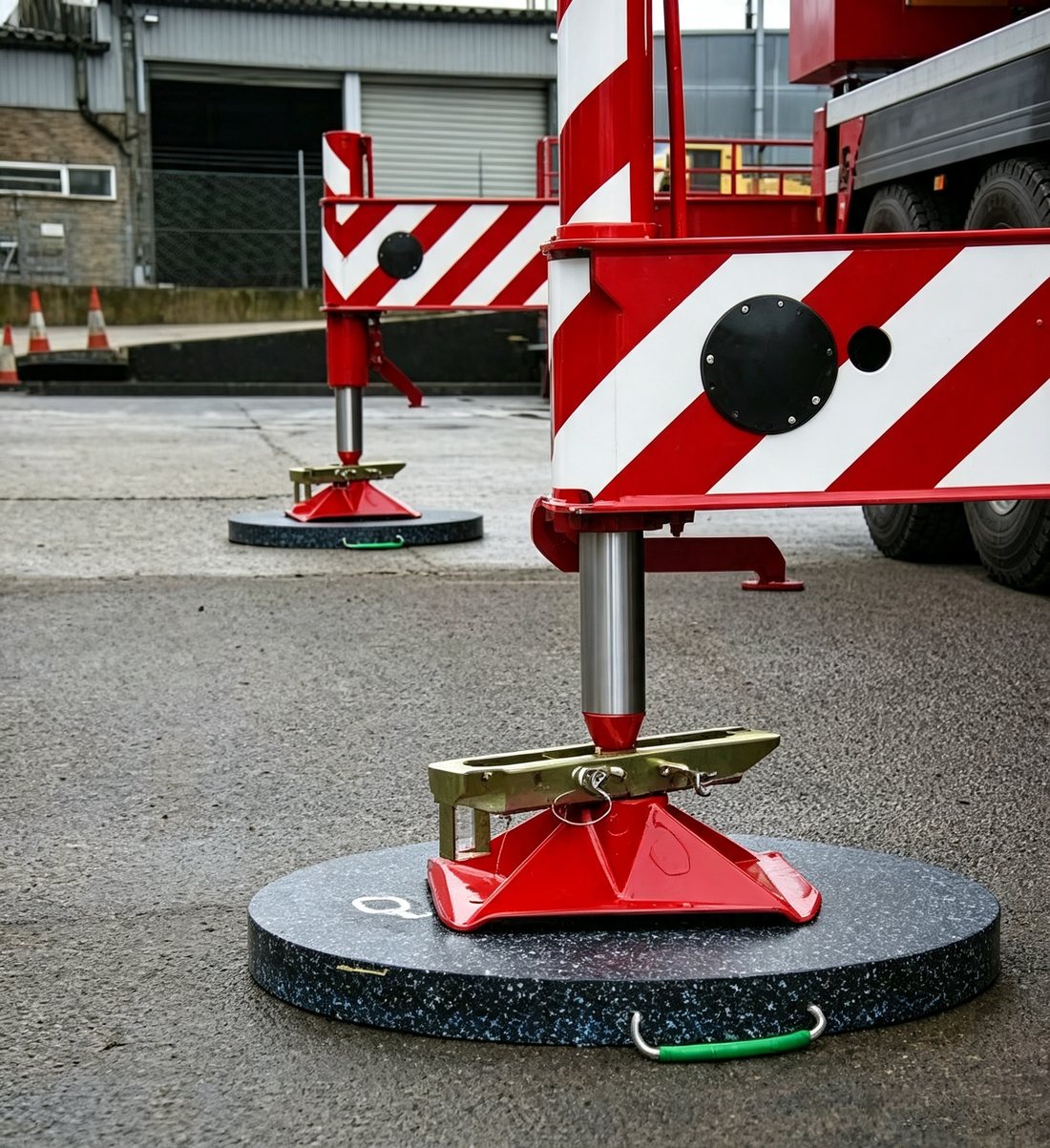
Crane pads for sale are not defined by the tonnage printed on a listing. A crane pad — also called an outrigger pad or stabilizer pad — is a thick plate placed under an outrigger float to spread force into the ground. What matters is the ground pressure the pad produces at its actual size, on your ground, under your crane, with the load you intend to lift.
Matunion supplies UHMWPE outrigger pads from 300×300 mm to 2000×1000 mm, in thicknesses from 25 mm to 100 mm, listed from 10 t to over 100 t static across the range. This guide explains the rating basis, how to size a pad, what drives price, how to inspect new and used pads, and the questions to ask any crane pads supplier before you pay a deposit.
Crane Pads for Sale: Types and Use Cases
A crane pad increases the area through which an outrigger force reaches the ground. A ground mat is a different product: thinner and larger, used to build a running surface for vehicles and tracks. Cribbing is different again: stacked timber or blocks used to build height. Mixing the three is a common specification error in this category. Crane outrigger pads are the same product under a different name; what changes is the calculation, not the label. A listing for crane pads for sale that shows one tonnage for every size is describing a category, not a specification.
Material options
UHMWPE. UHMWPE is the material Matunion uses for crane pads. A 600×600×40 mm pad weighs about 14 kg, light enough for one worker to carry and place instead of waiting for the crane. Weight is only comparable at the same size and thickness: plywood and metal pads may be supplied at a different thickness for the same duty, and a metal plate's weight depends on the thickness specified, so ask for the weight at the size and thickness you are buying. UHMWPE absorbs no water, does not rot, is electrically insulating and does not spark; our pads are listed for −50 °C to +80 °C, with a friction coefficient of at least 0.5 tested to GB/T 3960-2016.
HDPE. HDPE pads cost less than UHMWPE and are used for lighter duties such as utility vehicles, RVs and small plant. They are less stiff than UHMWPE for the same thickness, so the load rating must be confirmed at the actual thickness rather than assumed from the material name.
Wood and plywood. Timber pads are inexpensive and available locally, but they absorb water, swell, rot and vary in strength. They are hard to inspect internally and have a short life on wet sites, though they suit one-off jobs where price and local pickup matter.
Aluminum and steel. Metal pads are strong and stiff, but heavy, conductive and — for steel — sparking. They also carry scrap value, making them a theft target, and suit applications where weight is not a constraint.
| Material | Handling | Water / rot | Load behaviour | Watch-out |
|---|---|---|---|---|
| UHMWPE | About 14 kg at 600×600×40 mm; one or two workers | Zero absorption; does not rot | Stiff, consistent; static rating by size and thickness | Confirm rating at the exact size and thickness |
| HDPE | Light, similar handling | Does not rot | Less stiff than UHMWPE at equal thickness | Confirm rating; not a substitute for UHMWPE on heavy lifts |
| Wood / plywood | Weight depends on size and thickness; often two workers | Absorbs water; rots | Variable; strength depends on species and moisture | Short life when wet; internal rot |
| Aluminum | Weight depends on plate thickness; two workers or plant | Does not rot | Strong and stiff | Conductive; high scrap value |
| Steel | Weight depends on plate thickness; plant needed | Corrodes | Strong and stiff | Conductive, sparks, heavy, theft target |
Handling notes are indicative and depend on size, thickness, pattern and handles. Load behavior is described qualitatively; request a rated capacity at the exact size, thickness and ground condition.
Standard sizes and thickness
Crane pad sizes run from small jack pads to large outrigger pads; custom sizes are available above and between the standard steps.
| Shape | Size (mm) | Thickness (mm) | Area (m²) | Typical application |
|---|---|---|---|---|
| Square | 300×300 | 30–40 | 0.09 | RV jacks, small plant, utility |
| Square | 400×400 | 40 | 0.16 | RV, light utility vehicles |
| Square | 500×500 | 40–50 | 0.25 | Utility trucks, small cranes |
| Square | 600×600 | 40–60 | 0.36 | Mobile cranes, concrete pumps |
| Square | 800×800 | 50–60 | 0.64 | Mobile cranes, medium plant |
| Square | 1000×1000 | 50–80 | 1.00 | Larger cranes, pump trucks |
| Square | 1200×1200 | 60–100 | 1.44 | Heavy mobile cranes |
| Square | 1500×1500 | 100 | 2.25 | Heavy lifts, soft ground |
| Round | 800 dia. | 50–60 | 0.50 | Rolling into position; utility |
| Round | 900 dia. | 50–60 | 0.64 | Rolling into position; cranes |
| Round | 1000 dia. | 60–80 | 0.79 | Cranes, pump trucks |
| Round | 1200 dia. | 60–80 | 1.13 | Heavy cranes |
| Round | 1500 dia. | 100 | 1.77 | Heavy lifts, soft ground |
Matunion standard square and round sizes. Round areas are calculated from the diameter. Load capacity is deliberately not shown because it is not a function of size alone; request the static rating for the exact size, thickness and ground.
A round pad of the same nominal width has about 21% less area: a 1000 mm square is 1.00 m², while a 1000 mm round is 0.785 m². That matters when the calculation is close, though a large round pad can be rolled by one person while a square pad usually needs two.
Application fit
Mobile crane outriggers are the core use: match the pad to the outrigger float and the calculated force. Concrete pump trucks often use 600–1000 mm pads, 50–80 mm thick, with a recessed centre to capture the round float; our specialty range lists 30–100 t per pad. Fire trucks use high-visibility pads listed to 45 t, rescue vehicles and wreckers 50 t and above, and RVs 300–500 mm pads, 25–40 mm thick, listed at 5–15 t. Utility and bucket trucks use lighter pads where non-conductive material matters.
Those figures are application-specific, not universal ratings; confirm the rating for the exact pad, thickness and ground before ordering.
Load Rating and Ground Pressure
Static vs dynamic load
A static rating assumes the load is applied and held. A dynamic event — lifting, swinging the boom, travelling, braking, impact — adds force beyond the static weight. A static rating is not a dynamic rating unless the supplier states a dynamic basis and the test behind it.
Published planning multipliers used in our load calculator include 1.5 for lifting, 1.4 for swinging, 1.3 for turning and 1.2 for braking. They are planning aids; the lift plan and the crane manufacturer's load charts govern.
Why tonnage claims are not comparable
A tonnage on a listing is usually the highest number the supplier is willing to print, at one size, one thickness and one assumed ground. Change any of those and the number changes. A 300 mm pad and a 1500 mm pad from the same supplier may both be described as "heavy duty", with a single range covering both.
| What the listing says | What it may mean | What to ask |
|---|---|---|
| "100 t pad" | Static, at one size and thickness, on firm ground, method not stated | Static or dynamic, size, thickness, ground, test method |
| "Heavy duty outrigger pads" | No defined load basis | The static rating at the size you are buying |
| "For a 50 t crane" | The crane class, not the pad capacity | Calculated outrigger force and configuration |
| "Tested to 100 t" | A test-rig figure, not a site condition | Test report, deflection and failure mode |
| "Safety factor of 3" | A design assumption | Safety factor against what, at what load |
| "Outrigger pads for crane use, one size fits all" | A marketing statement | A size calculation for your crane and ground |
Common claim formats, shown as examples rather than quotations from specific suppliers.
Matunion's range is listed from 10 t to over 100 t static, with the capacity depending on pad size, thickness and ground condition. We do not publish a universal tonnage for the range, because a single number would be misleading. The same logic applies to any supplier's claim: ask for the basis at the size you are buying.
Price Factors and Quote Comparison
Material, thickness and size
Crane pads price is driven first by material and mass. Virgin UHMWPE costs more than recycled or filled resin and behaves more consistently. Thickness is close to linear: a 100 mm pad uses roughly four times the material of a 25 mm pad at the same footprint. Size drives both material and freight.
Options should be quoted separately: anti-slip pattern, recessed centre, chamfered edges, rope handles, custom colour, laser engraving, serial numbers and QR codes. On a fleet order they are a small share per pad but a visible line in the total.
Freight, duty and container loading
Pads are dense, rigid and palletised. Large pads — 1200 mm and above — are usually volume-limited in a container, while small pads are weight-limited. Ask for the loading quantity by pad size and thickness rather than a generic "full container" figure.
Duty and tax depend on the HS code, origin and destination. Confirm the classification and landed cost with your customs broker; a supplier's estimate may exclude port charges, documentation or inland delivery. Matunion quotes FOB Qingdao, Shanghai or Ningbo, with CIF and DDP on request and EXW by agreement.
What a complete quote should include
| Quote line | Ask for in writing | Why it matters |
|---|---|---|
| Material | Virgin or recycled UHMWPE; grade | Determines stiffness, wear and price |
| Size | Millimetres, shape and tolerance | Area sets ground pressure |
| Thickness | Nominal and tolerance | Load behaviour and weight |
| Pattern | Pattern type and depth | Grip on wet steel and ground |
| Features | Handles, recessed centre, chamfer, engraving | Often omitted from the base price |
| Quantity and MOQ | Per size and colour | Trial-order feasibility |
| Lead time | Standard and custom, in writing | Schedule risk |
| Packaging | Pallets, strapping, edge protection | Damage rate and freight |
| Incoterm and port | FOB, CIF or DDP, named port | Cost and risk allocation |
| Test reports | Report number, product, test item | Evidence for the exact product |
| Payment and warranty | Terms, claim process, exclusions | Cash flow and after-sales risk |
Inspection and Acceptance
Sample versus bulk
Ask whether the sample was made on the same line, from the same resin batch, as the bulk order. A sample made by hand or on a different press is not evidence that the production run will match. Keep a retained sample and put batch numbers on the packing list so the container can be checked against it.
Dimensions, weight and surface
Measure thickness at four points or more and check that the pad sits flat without rocking. Measure side length or diameter, weigh the pad against the nominal figure, and inspect the pattern, colour, handles, recessed centre, chamfer and engraving; for round pads check roundness. Record the results against the purchase specification, not the sample alone.
Test report matching
Ask for the full PDF, the report number, the product or model, the test item and the method. Matunion's SGS reports are SHIN2112090776MR-01, QDIN2408001532PL01_EN, QDIN2408001532PL02, SHAPH25016759501 for RoHS and SHAPH25016759503 for EN71.3. A report for a different grade or product is not evidence. A CE certificate is available on request; any supplier claiming certification should show a certificate in its own name.
Used pads: what to inspect
Used outrigger pads can be a sensible purchase for a rental fleet or a short project, but there is no common grading standard for used pads, so the checks below are general practice rather than a code requirement. Inspect every pad, not a sample photograph. Look for cracks and through-cracks, permanent deformation, crushed or rounded edges, layer separation on laminated pads, damaged or missing handles, a polished or worn anti-slip surface, and any sign of repair. Measure the remaining thickness against the nominal size. Reject any pad that no longer has structural integrity, and do not accept a seller's grade label as a substitute for inspection. Ask how the stock has been stored and whether it has been exposed to UV for years.
Supplier Checklist
10 questions to ask
| # | Question | Evidence to request | Red flag |
|---|---|---|---|
| 1 | Who is the legal entity, and where is the production site? | License, address, live video | Office only; no production site |
| 2 | Is the pad UHMWPE, HDPE, wood or metal? | Datasheet, grade, virgin or recycled | "Heavy duty plastic" only |
| 3 | What is the static rating at this size and thickness? | Written rating, test method, ground assumption | One tonnage for the whole range |
| 4 | What sizes and thicknesses can you make? | Size matrix, drawings | "Any size" with no drawing |
| 5 | What custom options are available? | Pattern, recess, chamfer, handle, engraving samples | Custom quoted without tooling cost |
| 6 | Which test reports match this pad? | Full PDF, report number, model | Mismatched or expired report |
| 7 | How do you keep bulk consistent with the sample? | Production sample, batch records | Sample from another line |
| 8 | What inspection happens before shipment? | Checklist, AQL, loading photos | "Visual check only" |
| 9 | What are the MOQ and lead time in writing? | Quote by size and colour | Verbal only; changes after deposit |
| 10 | What does the quote include? | Incoterm, port, validity, breakdown | Lump sum with no breakdown |
Red flags
- A single tonnage for every size and thickness in the range.
- A "static" rating that becomes "dynamic" when you ask for the test report.
- A test report for a different material, grade or product.
- Certification claimed without a certificate in the supplier's name.
- A sample that was hand-made or made on a different line from bulk.
- No written MOQ, lead time or tooling cost for custom pads.
- Payment requested to a personal account or an unrelated company.
- A price far below the resin cost, which usually means filled or recycled material, a thinner pad, or hidden freight.
Where Matunion fits — and where we do not
Matunion supplies UHMWPE outrigger pads and HDPE/UHMWPE ground mats. Pads run from 300×300 mm to 2000×1000 mm, 25–100 mm thick, standard and custom; confirm current capacity and lead time in writing.
We do not supply aluminum, steel or timber pads, hold local stock or offer rentals. If you need a metal plate, same-week local delivery or a rental fleet, a local supplier is the better fit. If you need UHMWPE pads with a stated static rating and a documented test report, we can quote against your crane and ground data.
Buyer FAQ
Can outrigger pads be used on asphalt or concrete?
Yes, with checks. Asphalt creeps under sustained load and softens in heat, so a pad that works in winter may sink in summer. Concrete can crack, and voids or utilities beneath the slab are hidden. Keep the pad away from joints and edges, use a larger pad where the surface is uncertain, and confirm the subsurface. OSHA's requirement for firm, drained and graded ground still applies; a paved surface is not automatically a competent one. Where outriggers are set for assembly or disassembly, §1926.1404(q)(5) also applies to the blocking placed under the outrigger float or pad.
What is the MOQ for custom outrigger pads?
Standard sizes start at 30 pieces. Custom sizes, patterns or colours typically start at 50–100 pieces depending on tooling, so confirm the exact minimum in writing. Sample and production lead times are confirmed per order before the deposit: they vary between peak and off season, and Chinese New Year can extend the schedule. Ask for a written date.
How thick should a crane outrigger pad be?
There is no universal thickness. Thickness works with area and material stiffness: a larger pad spreads load over more ground, while a thicker pad resists deflection and edge crushing. In our standard range, 300–400 mm pads are typically 30–40 mm thick, 500–600 mm pads 40–60 mm, 800–1000 mm pads 50–80 mm, and 1200–1500 mm pads 60–100 mm. Those pairings are starting points, not ratings; confirm the static capacity at the exact size, thickness and ground.
How do you inspect a used outrigger pad?
Inspect each pad in daylight. Check for through-cracks, edge splits, permanent deformation, crushed corners, layer separation on laminated pads, loose or missing handles and a worn anti-slip surface. Measure thickness at several points and compare it with the nominal size. Ask about service history and storage. Reject any pad with a structural defect; a repaired crack is not equivalent to an undamaged pad.
How do I calculate the right outrigger pad size?
Sizing is a lift-planning task, not a catalogue lookup. Take the maximum outrigger reaction for your crane configuration from the crane manufacturer's load charts, and the ground's permissible bearing pressure from a geotechnical assessment or plate load test. Choose the standard pad that gives enough area, then check the pressure the pad actually applies on that ground. Remember that a round pad has about 21% less area than a square pad of the same width. The final figures belong in the lift plan, confirmed with the crane manufacturer's software.
Next Step
Send us the crane model, outrigger float dimensions, ground condition and the load you intend to lift. We will return a size recommendation with the static rating stated at that size and thickness, plus a like-for-like quote. If you are comparing crane pads for sale, give every supplier the same data and use the 10 questions above — starting with us. The buying guide covers the full RFQ sequence.
CTA: Request a pad size recommendation · View standard outrigger pad sizes · See specialty pads for fire, rescue and RV.
Reviewed by: Matunion Engineering Team
Last updated: 5 November 2026
How we researched this guide: We reviewed published ground pressure guidance, OSHA 29 CFR 1926.1402 and 1926.1404, published outrigger pad listings and used-pad inspection guidance. Matunion product data comes from product datasheets and SGS reports; per-size load ratings must be confirmed in writing before purchase.