 Matunion
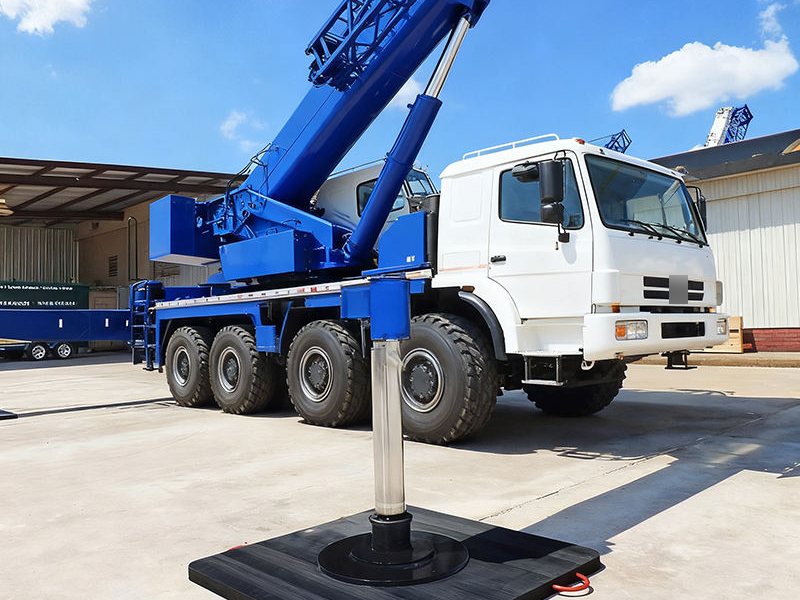
There is no single crane mats price per square foot in 2026 that applies to your order. Two quotes can show the same number and describe different products: one a 12.7 mm recycled HDPE mat, one a 25 mm virgin HDPE mat; one FOB Qingdao, one delivered to your yard; one for 30 pieces, one for a 40ft container. The unit is the same. The product is not.
This guide does not publish a price table: a per-square-foot figure without material, thickness, quantity and delivery terms is not a benchmark. It gives you the cost drivers, the formulas that put every quote on one unit, the FOB-to-landed calculation, and a quote template for any supplier.
Matunion supplies HDPE and UHMWPE crane mats and outrigger pads. Timber mats are outside our standard range; where volume supports it, we can help source them. Matunion quotes against a specification rather than a single per-square-foot number, and the method below works on our quotes and on anyone else's.
Crane Mats Price: What Drives the Price
A crane mat is priced by the material inside it, the cost of converting that material into a mat, and the cost of moving it to your site. Area is the unit buyers use to compare. It is not the cost driver.
Material and thickness
Four material families are commonly offered for crane mats, and each behaves differently under a crane outrigger or a tracked machine.
| Material | What it is | Relative price per ft² at equal thickness | Weight | Service life | Where it fits |
|---|---|---|---|---|---|
| Timber | Sawn hardwood or softwood, often bolted | Lowest in most markets — confirm | Heavy when wet | Short and variable | Temporary roads, cribbing, traditional crane mats |
| HDPE | Extruded high-density polyethylene | Mid | 38–42 kg per 4×8 ft at 12.7 mm | 10+ years, 1,000+ cycles (supplier-stated) | Ground protection, access, crane mats |
| UHMWPE | Extruded ultra-high-molecular-weight polyethylene | Higher | Similar density, usually supplied thicker | 15+ years (supplier-stated) | Outrigger pads, heavy load spreading |
| Composite | Fiber-reinforced polymer | High | Varies | Long | Heavy haul, weak ground, high point loads |
Relative positions are qualitative and vary by market and volume. Confirm with current quotes.
Thickness is the variable buyers miss. A 25 mm mat uses roughly twice the resin of a 12.7 mm mat at the same area, so its price per square foot should be higher. If two quotes for the same size differ by 40% and neither states thickness, the comparison has not started yet.
Material grade matters as much as material type. Virgin HDPE is our standard. Recycled content can lower cost, but it changes impact strength, color consistency and UV performance. "Recycled" is not a grade: ask for the percentage, source and test report.
Size and weight
Standard crane mat sizes are rectangular, and the 4×8 ft panel is a common reference unit in export markets.
| Size (ft) | Size (mm) | Coverage per mat | Weight (kg) | Handholds |
|---|---|---|---|---|
| 4 × 8 | 1220 × 2440 | 2.98 m² (32 ft²) | 38–42 | 6 |
| 3 × 8 | 910 × 2440 | 2.22 m² (24 ft²) | 28–32 | 6 |
| 3 × 6 | 910 × 1830 | 1.67 m² (18 ft²) | 21–24 | 4 |
| 2 × 8 | 610 × 2440 | 1.49 m² (16 ft²) | 19–22 | 4 |
| 2 × 6 | 610 × 1830 | 1.12 m² (12 ft²) | 14–17 | 4 |
| 2 × 4 | 610 × 1220 | 0.74 m² (8 ft²) | 9–12 | 4 |
12.7 mm HDPE, client datasheet. Other thicknesses and materials change the weight.
Price per square foot usually rises as the mat gets smaller. Cutting, handholds and packing are spread over less area, and offcuts have to be charged somewhere. A 2×4 ft mat can cost more per ft² than a 4×8 ft mat from the same sheet.
Weight is a cost even when the price is unchanged. A 4×8 ft HDPE mat at 38–42 kg is a two-person lift; a full container is 11–24 t. Freight and handling follow weight, not area.
Order volume and customization
Volume is the largest controllable variable after material. Standard mats (1220 × 2440 × 12.7 mm) have an MOQ of 30 pieces; custom sizes, colors and logos usually start at 50–130 pieces. The price break that matters is usually the container: 300–320 mats in a 20ft, 550–580 in a 40ft for 12.7 mm HDPE.
Customization adds cost in three places: setup (tooling, color change, artwork), minimum run (a custom color may require a full batch), and yield (a custom size may waste more sheet). Logos and serial numbers are usually priced per mat once setup is paid. Ask for each item separately. Quotes that bundle these into one line are hard to compare.
The same logic applies to crane outrigger pads. A standard 600×600 mm pad and a custom 650×650 mm pad can differ more in setup than in material. UHMWPE outrigger pads are often quoted per piece rather than per square foot.
Price Benchmarks and Cost Breakdown
What crane mats cost is a stack, not a single number. Build the stack once and every future quote becomes comparable.
Resin, labor, packaging and freight
| Cost element | What it includes | What moves it | How to verify |
|---|---|---|---|
| Resin | HDPE or UHMWPE, virgin or recycled | Grade, molecular weight, recycled share, resin market | Datasheet, batch record, test report |
| Additives | UV stabilizer, carbon black, color | UV package, custom color, outdoor warranty | Additive datasheet, UV test data |
| Conversion | Extrusion, pressing, energy, labor | Line efficiency, thickness, pattern, run length | Production video, equipment list |
| Tooling and pattern | Die, tread, custom shape | New pattern, custom size, engraving | Drawing, setup charge, MOQ |
| Hardware | Handles, connectors, fixings | Handle type, connector count, compatibility | Sample, drawing, connector spec |
| Testing | Third-party reports, batch tests | Test scope, lab, frequency | Full PDF with report number |
| Packaging | Pallets, banding, edge protection | Export distance, unloading method, container fill | Packing list, loading photos |
| Inland and port | Trucking, export clearance | Port, distance, documentation | FOB quote breakdown |
| Ocean freight | Sea freight and surcharges | Lane, season, carrier, container type | Forwarder quote with validity |
| Insurance and duty | Cargo insurance, duty, VAT | Incoterm, HS code, destination | Broker advice, CIF/DDP quote |
Resin is typically the largest single cost in an extruded plastic mat. A price far below the resin content of the product is a material or thickness signal, not a bargain. Labor and energy are relatively stable per container; freight is the line most likely to change between quotes.
FOB vs landed cost
FOB and landed cost answer different questions. FOB tells you what the goods cost at the port of origin. Landed tells you what they cost at your gate.
Landed cost = FOB + ocean freight + insurance + destination charges + duty and taxes + inland haulage + unloading + storage.
| Line item | Usually quoted by | In FOB? | In CIF? | In DDP? |
|---|---|---|---|---|
| Product and export packaging | Supplier | Yes | Yes | Yes |
| Inland transport to port | Supplier | Yes | Yes | Yes |
| Export clearance | Supplier | Yes | Yes | Yes |
| Ocean freight | Forwarder or supplier | No | Yes | Yes |
| Cargo insurance | Forwarder or supplier | No | Yes | Yes |
| Destination terminal charges | Forwarder or broker | No | Usually no | Yes |
| Import clearance, duty, VAT | Broker or importer | No | No | Yes |
| Inland delivery and unloading | Forwarder or buyer | No | No | Yes |
Incoterms 2020. Risk transfer differs from cost: under FOB and CIF, risk passes at origin; under DDP, the seller bears risk to the destination.
Ask for the crane mats FOB price and the CIF price separately, with the same validity date. A supplier who will only quote "landed" may be bundling a forwarder margin or a cost that is not itemized. Neither is automatically wrong; both should be visible.
Crane mats landed cost is the number to use when comparing suppliers in different countries. Convert it to cost per m² before you compare it to anything.
20ft/40HQ math
Crane mats container loading is the last cost driver and the easiest to get wrong. For 12.7 mm HDPE at 4×8 ft:
| Container | Mats | Mat area | Approx. weight |
|---|---|---|---|
| 20ft | 300–320 | 894–954 m² | 11.4–13.4 t |
| 40ft | 550–580 | 1,639–1,728 m² | 20.9–24.4 t |
Client data; exact quantity depends on size, thickness, packaging and accessories. Confirm the loading plan before booking.
A 40ft carries about 1.7–1.9 times the mat area of a 20ft. If the 40ft ocean freight on your lane is less than about 1.8 times the 20ft freight, the 40ft lowers freight cost per m². That is arithmetic, not a market rule; confirm both rates with your forwarder on the same day.
Weight can cap a 40ft before volume does. At 580 mats and 42 kg, the load is about 24.4 t; container payload and road limits vary by carrier and country, so confirm both before booking a full load. Thicker mats reach that limit with fewer pieces.
Hidden Costs
The quote is not the invoice. These are the lines that appear after the deposit.
Freight, duty and insurance
Ocean freight is seasonal and lane-specific. Peak season surcharges, fuel surcharges and port congestion can change a rate between quote and booking. Ask for a validity date and a named port, and re-confirm before booking.
Duty depends on HS classification and destination. The same mat can be classified differently depending on material and use. Confirm the HS code and duty rate with your customs broker; do not rely on a supplier's estimate.
Cargo insurance is priced as a percentage of the insured value, but the cover matters more than the rate. Check whether it covers handling damage, water damage and container accidents, and whether the deductible is per claim or per shipment.
Inspection and warehousing
Third-party inspection is priced per man-day plus travel. For a container order it is usually cheaper than a failed delivery. Arrange it before production is complete so the inspector sees the line and packaging, not only the finished stack.
At destination, storage and demurrage are the quiet costs. A container waiting for documents, a truck waiting for a forklift, or a yard charging by the day can add more than the inspection. Clear documents before the vessel arrives and confirm unloading equipment before release.
Replacement and return costs
Return freight on a failed mat can exceed the value of the mat. That is why the practical response to a quality claim is usually a replacement in the next shipment, not a return. Agree the claim process before the order: who inspects, what evidence is required, what is covered and what is excluded.
Budget a spare allowance for handling damage. The right number depends on site conditions, equipment and how the mats are stored. A supplier who refuses to discuss spares is telling you something about after-sales.
Rental vs Purchase, New vs Used
Price per square foot answers "what does a mat cost". It does not answer "what should we do".
Utilization and break-even
Break-even months = landed purchase cost ÷ monthly rental cost for the same quantity and specification.
Include the costs that rental bundles and ownership does not: storage, handling, cleaning, inspection, repair, insurance and the capital tied up in a mat that sits idle. If the mats are used for a few weeks a year, rental usually wins. If they move between projects for years, ownership usually wins.
Compare like with like. A rental mat may be thinner or in worse condition than the mat you would buy. A low rental rate on a 12.7 mm mat is not a benchmark against a 25 mm purchase.
Lifecycle cost
Lifecycle cost per ft² per year = landed cost per ft² ÷ expected service life in years, plus repair and replacement.
Service life claims need a basis. Our supplier-stated figures list HDPE mats at 10+ years and 1,000+ reuse cycles, and UHMWPE mats at 15+ years. Those figures assume normal site use, correct handling and storage off the ground. A mat dragged over sharp rock or left in UV for a decade will not reach them.
New vs used is the same calculation with a shorter life. Used mats may be thinner, UV-degraded, or fitted with connectors that do not match yours. Ask for remaining thickness, previous use and a photo of the batch. Price the mat per remaining year, not per square foot.
How to Compare Quotes
Normalize by m², ton and piece
| Metric | Formula | Use it when | Watch out |
|---|---|---|---|
| Price per ft² | Quote ÷ ft² per mat | US and ANZ quotes | Thickness must be identical |
| Price per m² | Quote ÷ 2.98 (4×8 ft) | Comparing metric quotes | 1 m² = 10.764 ft² |
| Price per ft² per mm | Price per ft² ÷ thickness (mm) | Comparing thicknesses | Ignores material grade |
| Price per kg | Quote ÷ mat weight | Checking material content | Pattern and additives change weight |
| Landed per m² | Landed total ÷ total m² | Cross-country comparison | Same Incoterm required |
| Cost per m² per year | Landed per m² ÷ service life | Lifecycle comparison | Service life needs a basis |
| Cost per ton of rating | Landed price ÷ rated static tonnes | Capacity comparison | Only valid if the rating basis matches |
| Freight per m² | Container freight ÷ mat area loaded | Container planning | Confirm the actual loading plan |
Cost per ton of rated capacity is easy to abuse. A static rating, a dynamic rating and an ultimate failure load are not the same number, and a rating without thickness and ground conditions is a number without an engineering basis. Use it only when two suppliers state the same basis in writing.
Tons also need a definition. A metric tonne is 1,000 kg; a US short ton is 907 kg. A 100 ton pad rated in short tons is about 9% lighter than one rated in metric tonnes. Ask which unit the supplier uses.
Ask for the same spec
Freeze these fields before you compare price:
| Field | What to specify | Why it changes price |
|---|---|---|
| Material | HDPE, UHMWPE, recycled share | Resin grade is the largest cost |
| Thickness | Nominal mm plus tolerance | Resin content scales with thickness |
| Size | Length × width plus tolerance | Cutting waste and handling |
| Weight | kg per mat | Confirms material content |
| Surface | Pattern, cleat height, both sides | Tooling and cycle time |
| Handles | Number, type, position | Labor and hardware |
| Color | Standard or custom, UV package | Batch size and additives |
| Connectors | Type, material, compatibility | Extra parts and tooling |
| Packaging | Pallet, banding, edge protection | Freight and damage rate |
| Delivery | Incoterm, named port, validity | Landed cost |
Red flags in cheap quotes
| Red flag | What it usually means | What to ask |
|---|---|---|
| Price per ft² far below the resin content | Thinner sheet, filled resin, or a stale quote | Thickness, weight, grade, test report |
| "120 tons" with no basis | Marketing number, not an engineering rating | Static or dynamic, size, thickness, ground |
| No thickness tolerance | Thin spots pass as nominal | Tolerance in writing, measured sample |
| "Recycled" with no percentage | Unknown and variable input | Percentage, source, batch record |
| Quote without Incoterm or port | Freight and risk are undefined | FOB and CIF, named port, validity |
| Price valid for a few days | Resin or freight volatility, or pressure selling | Validity date and re-quote policy |
| Sample from a different line | Bulk may not match the sample | Production sample, batch record, live video |
| No test reports | Claims cannot be verified | Report number, product, test item |
| "Landed" price with no breakdown | Hidden margin or cost | Line-item breakdown |
| Payment to an unrelated account | Entity mismatch | Contract, invoice and bank account in one name |
Buyer FAQ
What is included in a ground protection mat quote?
A complete quote includes unit price, quantity, material and thickness, size and tolerance, packaging, Incoterm and named port, lead time, payment terms, validity, test reports and warranty. A price per square foot is one line of a quote, not the quote.
How do I compare FOB and landed cost?
Add ocean freight, insurance, destination charges, duty, taxes, inland haulage and unloading to the FOB price, then divide by the total mat area. Compare landed cost per m², not per mat, and make sure both quotes use the same Incoterm, port and validity date.
What hidden costs should I budget for?
Destination terminal handling, customs broker fees, demurrage and detention, inland haulage, unloading equipment, storage, pre-shipment inspection, spare mats and return freight. None of these are unusual; the problem is when they are not in the budget.
How do I calculate the right outrigger pad size?
Use the CICA simplified method: force per outrigger = 0.65 × (crane weight + load + rigging). Divide that force by the allowable ground bearing pressure to get the minimum pad area, then choose a standard pad that meets or exceeds it. The 0.65 is a simplified distribution factor, not a safety factor; confirm the final size with the crane manufacturer's lift plan. See the pad sizing calculator.
What is the load capacity of a UHMWPE outrigger pad?
Our UHMWPE outrigger pads are rated from 10 t static at 300 mm to over 100 t static at the largest sizes, with capacity depending on size, thickness and ground conditions. There is no universal tonnage for a material. Ask for the rating at the exact size and thickness you are buying, and the ground assumption behind it. See UHMWPE outrigger pads.
Next Step
Send us a specification, not a size. Matunion supplies HDPE and UHMWPE mats to your specification, and the specification sheet is available on request. If you already have three quotes, use the normalization table above and ask every supplier the same questions.
CTA: Request the specification sheet · Use the buying guide · Check container loading.
Reviewed by: Matunion Engineering Team
Last updated: 5 November 2026
How we researched this guide: Cost structure and normalization methods were built from Matunion client datasheets, Incoterms 2020 rules and container loading data. No market price figures are published because a price without specification, volume and delivery terms is not comparable. Confirm all prices, freight and duty with current quotes and your customs broker.